
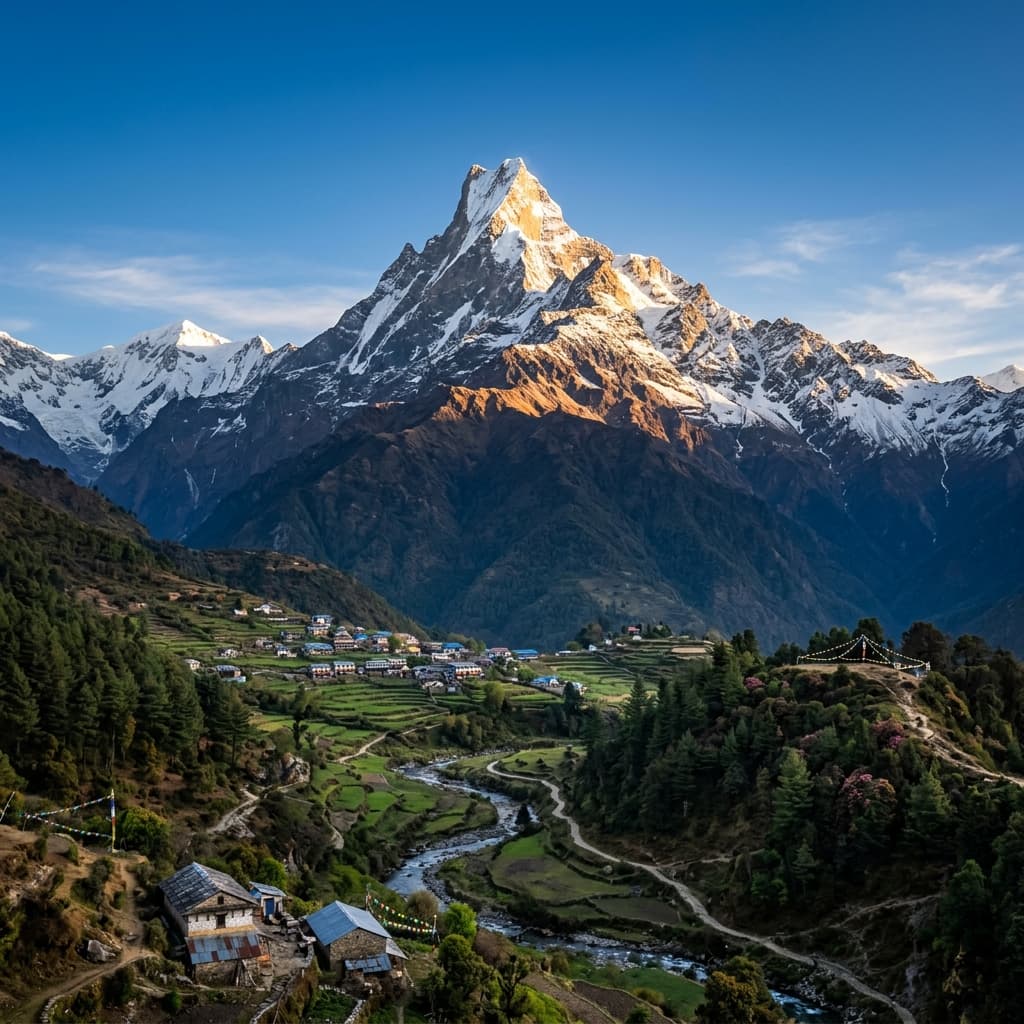
The majestic double peak of Mount Machhapuchhre (Fish Tail) rising above Pokhara
Standing tall at 6,993 meters (22,943 feet) in the north-central region of Nepal, Mount Machhapuchhre—frequently spelled Machapuchare—is one of the most iconic peaks in the entire Annapurna massif. Yet, unlike its neighboring giant Annapurna, Machhapuchhre has never been officially summited. It remains a silent sentinel, a holy mountain untouched by the footprints of modern mountaineers.
The Legend of the Fish Tail
In the Nepalese language, Machhapuchhre translates literally to "fish's tail." Looking at the mountain from the south, particularly from the lakeside city of Pokhara, its unique double summit forms a steep, symmetrical profile that resembles the tail of a fish diving into the earth. To the Gurungs and other local communities of Chomrong, the mountain holds a profound spiritual significance. It is believed to be the sacred home of the Hindu deity Shiva, and its peak is revered as a sanctuary of absolute purity.
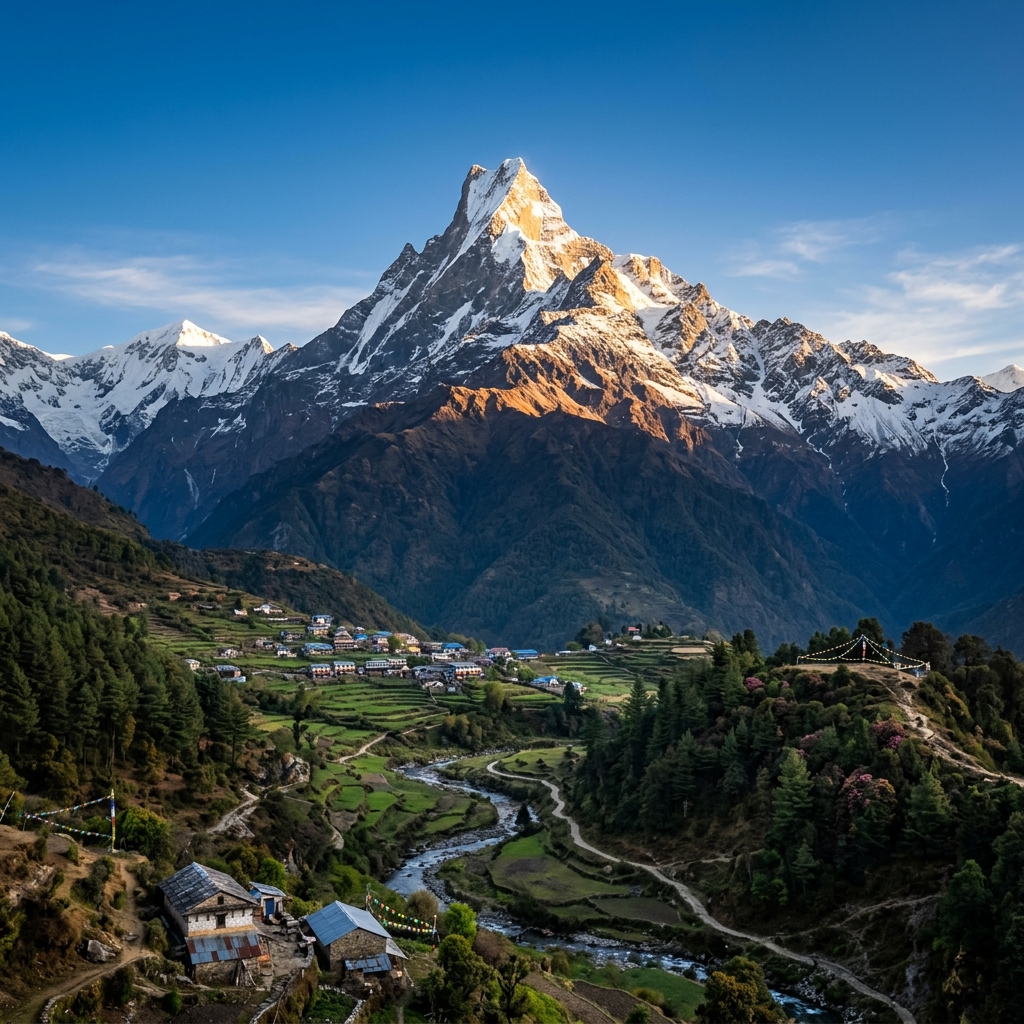
The striking double peak of Machhapuchhre rising into the Himalayan sky
The 1957 British Expedition
The only official attempt to climb Machhapuchhre occurred in 1957. A British team, led by the legendary Lieutenant Colonel Jimmy Roberts, set out to climb the peak. The team included renowned climbers Wilfrid Noyce and A. D. M. Cox. Before embarking, King Mahendra of Nepal granted them permission on one strict condition: they must not step foot on the summit itself, out of respect for the mountain's sacred status.
Noyce and Cox climbed via the formidable north ridge. They fought their way up through ice, snow, and harrowing winds, reaching within just 150 feet (46 meters) of the summit. True to their promise to the King, they turned back at 6,947 meters, leaving the absolute peak untouched. Upon their return, Noyce published a classic account of their journey, Climbing the Fish's Tail, documenting the raw beauty of the mountain.
"The mountains teach us humility. Some summits are not meant to be conquered, but to be admired from afar, preserving their sacred peace."
A Sanctuary Closed to the World
Following the 1957 expedition, the Nepalese government officially declared Machhapuchhre off-limits to all climbers. No climbing permits have been issued since, ensuring that the mountain remains a sanctuary. While rumors persist that New Zealand climber Bill Denz made an unauthorized solo ascent in the early 1980s, the official record remains clear: Machhapuchhre's summit remains pure and unviolated.
For trekkers walking the Annapurna Base Camp trail, the peak of Machhapuchhre is a constant companion. It towers over the entrance to the Annapurna Sanctuary, providing dramatic vertical relief that makes it appear far larger and more commanding than its actual elevation suggests. It is often called the 'Matterhorn of Nepal' due to its steep, pyramid-like shape.
Preserving the Sacred
In a world where almost every peak has been mapped, climbed, and commercialized, Machhapuchhre stands as a beautiful anomaly. Its status as an unclimbed peak is not a failure of human ambition, but a triumph of cultural respect. It reminds us that there are still places on Earth where local beliefs and sacred traditions hold power over the human desire to conquer.
At Altura, we draw constant inspiration from these Himalayan giants. The preservation of local heritage, the deep respect for the natural environment, and the timeless wisdom of the mountain communities are at the heart of our mission. Just as the local people protect the sacred slopes of the Fish Tail, we strive to support sustainable practices that honor the purity of the land.